
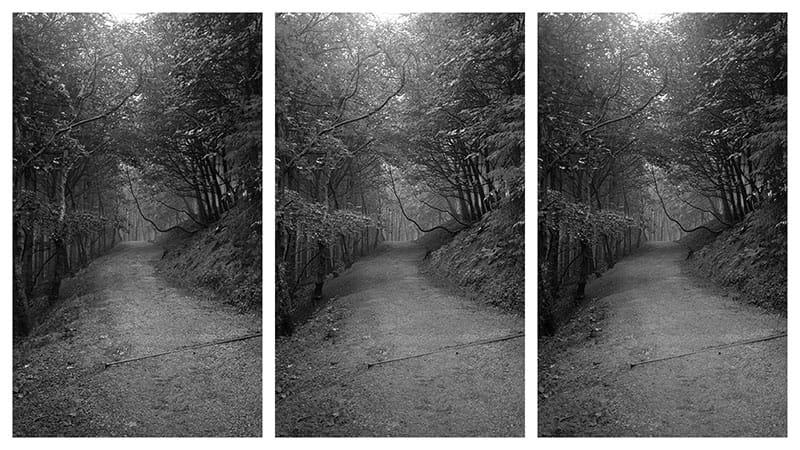
Converting a photo to black and white well is far more than hitting “desaturate” – it is about controlling how each colour becomes a shade of grey, and shaping contrast. The key is a proper conversion plus tonal control. Here’s how to edit black and white photos.
There are two ways to edit a photo into black and white – the right way, and the wrong way. Which way are you doing it?
iPhotography has got 2 great black and white photo editing videos for you to watch, depending upon whether you’re a Photoshop or Lightroom user. Time to find out on the tips you might be missing when editing your black & white photos.
Black & White Photography Editing in Photoshop
For Photoshop users, it is possible to edit your black and white photos using Camera RAW as well as the main Photoshop workspace.
Try to avoid using a direct desaturation of an image from colour to black and white. Instead, use the dedicated black & white adjustment option under IMAGE>ADJUSTMENT>BLACK & WHITE.
In this tool, you’ll be faced with presets of black & white variations. Some are heavy on the contrast and others are a bit softer. Under these presets you can continue to customise the black & white finish further.
Using the colour channel sliders underneath adjust the appropriate ones (based on the colours in your original shot) to change their appearance in black & white.
You’ll start to see that editing black and white photos don’t start and finish with a simple desaturation. There are extra adjustments you can make to tone the image in a more stylised way.
Black & White Photography Editing in Lightroom
In the same way as editing black & white photos in Photoshop has its own custom tools, so does Lightroom. And it’s not just Lightroom, if you edit in Luminar 4 then many of these processes will be similar.
At the top of your basic panel, there is a treatment option of colour or black & white. Choose black & white and scroll down to the B&W Mix panel. Here you’ll have access to colour channel sliders which allow you to tweak the colours from the original shot.
You’ll only need to adjust the colours that were present in your original photo. Have a go at making live tweaks to your shots and see what creative effects it can give you.
Black and White Photography Editing: Summary
Hopefully, this quick guide to editing photos in black & white has given you a new approach. Just like a colour picture, black & white ones still need further adjustments to make those tones really pop.
Remember some colours, such as pink and yellow, don’t translate well into black and white so using these extra colour slider adjustments are perfect editing assistants to transform your monochrome photos!
If you’re an iPhotography member, don’t forget to share your photos in the gallery.
For more, read our guide to black and white photography.
Frequently Asked Questions
How do I convert a photo to black and white?
Use a dedicated black-and-white conversion (not just desaturate), which lets you control how each colour maps to a shade of grey. Then adjust contrast, blacks and whites, and dodge and burn to shape the tones.
Why not just desaturate to get black and white?
Because desaturating gives a flat, uncontrolled result. A proper black-and-white conversion lets you brighten or darken specific colours (e.g. a blue sky or red lips), giving far more control and impact.
How do I make a black and white photo punchy?
Increase contrast, set strong blacks and clean whites, use the colour sliders in the conversion to separate tones (e.g. darken skies), and dodge and burn to add depth and direct the eye.
Should I shoot in black and white or convert later?
Shoot RAW in colour and convert later, you keep all the data and full control over how each colour becomes grey. A black-and-white preview helps you see in mono while shooting.
What photos work best in black and white?
High-contrast scenes, strong shapes, textures and light, portraits, architecture, street and moody subjects. Without colour, composition, tone and light carry the image, so look for those.
Download the iCAMERA eBook
Get started with your camera and we’ll also send you the latest photo guides and amazing deals straight to your inbox.
Already a member? Click here to login and download this eBook.